Why organic content is the foundation of creator marketing
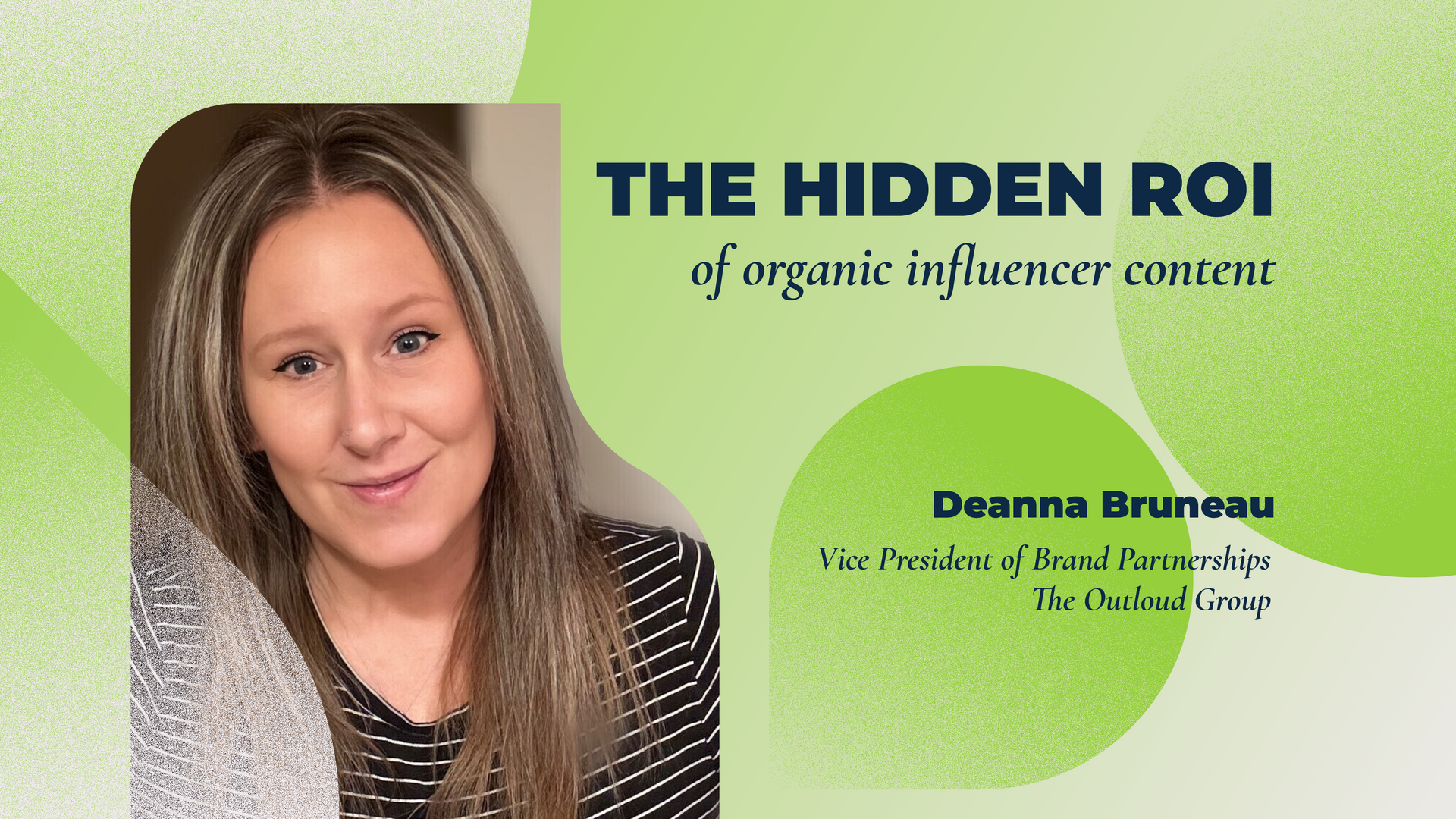
Brands are increasingly turning to paid amplification to squeeze more reach and measurable performance out of creator content. But this means they're skipping the very thing that makes influencer marketing effective in the first place. Deanna Bruneau, Vice President of Brand Partnerships at The Outloud Group, argues that organic content is the foundation of creator marketing, and that last-click attribution risks overlooking the trust, influence and conversions happening beyond the click.
Organic influencer content is not an optional awareness layer; it is the foundation that makes creator marketing work. It places a brand within the relationship between a creator and an audience that has chosen to listen, building trust, conversation, and social proof that paid distribution alone cannot manufacture. But because much of that influence does not result in an immediate click or trackable conversion, organic content is often undervalued and budgets shift toward lower-cost content and paid amplification. Brands often skip the organic foundation and move straight to paid amplification, and then wonder what went wrong when the results are underwhelming.
In practice, that approach can reduce a creator to a content-production partner and overlook one of the most valuable parts of influencer marketing - the relationship between creators and the communities that chose to follow them.
Why An Organic Content Strategy Should Be the Foundation
Paid amplification is valuable if you lean on it to extend reach, improve efficiency, and put strong creator content in front of highly targeted audiences. In many cases, paid CPMs can outperform other media channels. But paid media should enhance an influencer strategy, not replace its organic foundation.
The economics of organic influencer content can appear weak under last-click attribution because last-click measures only a narrow slice of its impact. Established creators may command higher CPMs precisely because their followers tune in for their recommendations, trust their opinions, and act on their advice. When a platform or content format does not offer a direct path to click, that trust often influences a later search, a screenshot shared in a group chat, or a purchase weeks later that is credited to another channel.
Last Click Attribution is an Outdated Performance Metric In Influencer Marketing
A recent attribution study* conducted in partnership with Avast found that only 25 percent of conversions observed within one week of exposure were directly attributed through a vanity URL, short link, or promo code. For every tracked conversion, three additional conversions occurred through direct visits or third-party marketplaces, bringing the total to four times the tracked count. The 4x result was an observed average across the study, not a universal multiplier.
That broader influence is why views, leads, branded search, and educated sessions — visits in which people meaningfully engage with the site after creator exposure — should be evaluated alongside direct conversions. A data-driven methodology can assign appropriate values to these upper- and mid-funnel signals, making the business case for impact beyond last-click attribution more concrete.
Marketing Work Cohesively Despite Our Best Efforts
Marketing channels work together, even when attribution systems evaluate them separately. A consumer might first encounter a brand through an ad on their connected TV, see a branded social ad that reinforces awareness, and later hear a favorite creator describe a personal experience with the product. Often, the trusted recommendation is the touchpoint that ultimately prompts action, even if the decision may reflect the cumulative effect of every exposure. People trust the creators they follow. 3 out of 5 consumers in a recent Deloitte report on the creator economy say they're more likely to engage positively with, or purchase from, a brand when it's recommended by a creator they follow**. None of those interactions may receive direct conversion credit, so marketers need to assess the full journey rather than treating each channel as an isolated source of influence.
Organic Content Is About the Audience
Organic content is where the audience relationship comes to life. It is where people engage, ask questions, share experiences, and form opinions about brands. An always-on organic program can:
- Build brand affinity over time
- Create community and conversation
- Generate social proof and cultural relevance
- Establish credibility through trusted voices
- Deliver audience feedback in real time
Organic activity also gives brands a meaningful way to test creators, creative ideas, messaging, and audience resonance before scaling paid investment. Those signals can improve creator selection, increase paid efficiency, and reduce guesswork in budget allocation. Consistent organic visibility keeps the brand in the conversation, building familiarity and trust that can strengthen performance across the funnel.
Why Organic & Paid Work Well Together
The strongest influencer programs do not choose between organic and paid. They use organic content to build trust, learn what resonates, and identify what is working; then they use paid amplification to scale it.
As the industry matures, it is important to understand why influencer marketing became effective in the first place. Creators are not valuable because they produce content, they are valuable because people choose to listen to them.

Deanna Bruneau
Vice President of Brand Partnerships at The Outloud Group
Deanna Bruneau is Vice President of Brand Partnerships at The Outloud Group, where she helps brands build creator and media strategies that deliver measurable results. With more than a decade in influencer marketing, she focuses on the long-term value of creator-led content across paid and organic channels. A former attorney, she brings an analytical approach to partnerships, strategy and execution.