
Why adtech’s biggest leak isn’t dollars. It’s work.
For years, the advertising industry has focused on financial leakage. That scrutiny is important, but it is incomplete. AdLib's Founder and CEO, Mike Hauptman, explores why we need to quantify the labor required to manage adtech's increasingly complex ecosystem.
For years, the advertising industry has focused on financial leakage. We scrutinize supply chains, debate made-for-advertising inventory, and calculate how much of every dollar reaches working media. Transparency initiatives, SPO strategies, and curated marketplaces are all designed to reduce monetary waste.
That scrutiny is important. But it is incomplete. We measure media waste carefully. We rarely measure operational waste at all.
Modern media buying is defined by fragmentation. Retail media networks continue to multiply. CTV inventory is distributed across hundreds of apps and platforms. DSPs operate with different optimization logics, reporting frameworks, and audience structures. Each new environment introduces incremental opportunity and incremental workflow.
What we rarely quantify is the labor required to manage that complexity.
Fragmentation has a headcount cost
Every additional platform brings its own contracts, reporting exports, attribution methodologies, and billing rules. Media teams reconcile performance across dashboards that were never designed to align. Analysts normalize metrics before insights can be presented clearly. Traders duplicate audience builds across systems that cannot coordinate frequency or budget logic.
This is not media waste in the traditional sense. It is an operational duplication.
In enterprise environments, that duplication is absorbed through scale. Dedicated teams manage trafficking, analytics, and cross-platform reconciliation. But for independent agencies and growth-stage brands, the burden is disproportionate. The cost of fragmentation appears not in hidden fees but in payroll.
Highly skilled professionals spend time aligning attribution windows, consolidating pacing data, and resolving discrepancies between platforms optimizing independently. As channel diversification accelerates, this work compounds.
Automation fixed bidding. It did not fix coordination.
The industry often asks whether artificial intelligence will replace media buyers. A more practical question is why media buyers are still responsible for so much manual coordination.
Automation has dramatically improved impression-level bidding and campaign optimization. Yet the surrounding infrastructure remains disconnected. Cross-channel reporting is still stitched together manually. Audience logic often lives in silos. Budget allocation decisions require human intervention because platforms optimize in isolation.
When systems do not coordinate, people do. That is the structural inefficiency.
The hidden constraint on growth
Operational overhead slows campaign launches and delays reporting cycles. It increases onboarding time for new channels and creates friction when testing emerging platforms. Many agencies hesitate to expand into additional retail media networks or CTV partners not because of performance concerns, but because they cannot absorb the added workflow.
In this environment, efficiency can no longer be defined solely by CPM reduction or supply path improvements. It must also be measured by how effectively systems reduce coordination costs across fragmented environments.
Media waste is visible and quantifiable. Operational waste is embedded in the process. But it is equally consequential.
The next efficiency frontier
As advertising becomes more omnichannel and more data-driven, competitive advantage will not belong only to those who optimize bids most effectively. It will belong to those who reduce the amount of human intervention required to make fragmented systems function cohesively.
The next phase of efficiency in advertising is not just about fixing the supply chain. It is about fixing the workflow around it.
Until that shift happens, the industry will continue to plug the visible leaks while the quiet ones continue to grow.
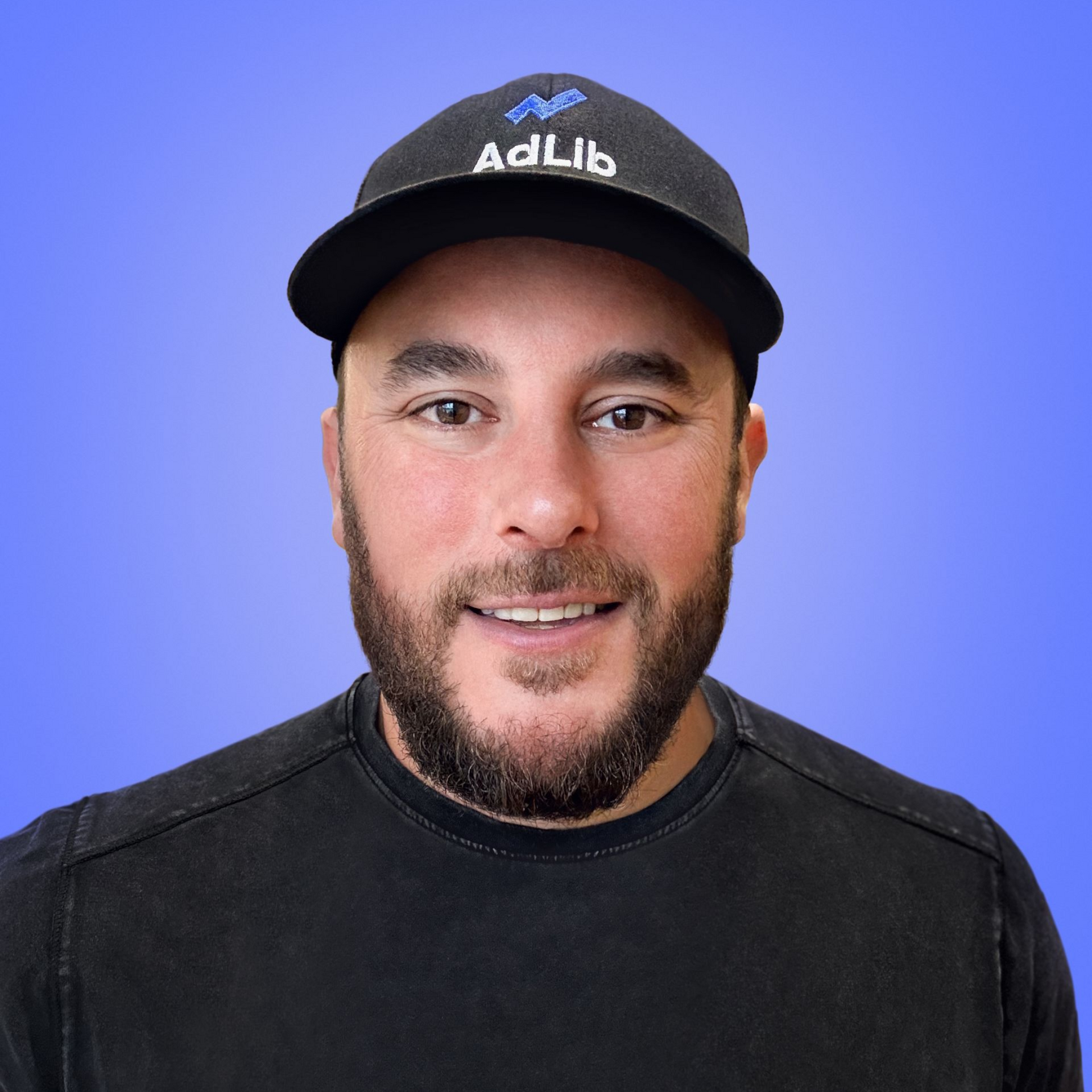
Mike Hauptman
Founder and CEO, AdLib
Mike is the Founder and CEO of AdLib Media Group, where the team is redefining how agencies and marketers scale programmatic advertising. Since entering the digital marketing space in 2006, Mike has been driven by a simple goal: to make sophisticated media buying more accessible, transparent, and profitable for everyone.
Before founding AdLib, Mike spent eight years as one of the first 100 employees at MediaMath, helping build one of the most influential programmatic platforms in the industry. That experience shaped his belief that performance, simplicity, and transparency should always go hand in hand. AdLib was recognized on the 2025 Inc. 5000 List of America's Fastest-Growing Private Companies.