
The American Prospect is right about the disease. They’re wrong about the cure
Following the American Prospect removing every programmatic ad from their website, Tomas Forsbäck, CEO and Founder of Readpeak, dives into why their diagnosis and their prescription are doing different work, and what it means for independent journalism.

Last month, The American Prospect removed every programmatic ad from their site and then wrote an essay explaining why. I recommend that everyone in the ad industry read the essay in full because it surfaces something a lot of us in adtech have been discussing: banners interrupt the read, data-targeted creative ignores the article right next to it, and the ads end up damaging the environment they’re supposed to fund.
Their closing question frames the whole experiment: “Can a nonprofit news organization sustain itself through the trust and generosity of its readers without selling their attention and data to the highest bidder?”
But their diagnosis and their prescription are doing different work, and conflating them causes problems for everyone who cares about independent journalism surviving.
The Diagnosis Is Correct
The American Prospect describes an advertising system that slows pages down, exposes readers to security vulnerabilities, siphons publisher revenue through layers of opaque intermediaries, and warps editorial judgment toward clicks and engagement at any cost. Google’s advertising technology business has been officially labeled a monopoly in federal court. The revenue that publishers receive from programmatic display is a fraction of what advertisers spend. And the user experience (banner ads that follow you from site to site based on your browsing history) damages the editorial environment it is supposed to fund.
People in adtech who have been paying attention have known all of this for years. The American Prospect won’t be the last publication to name the problem, either.
But is the Prescription Correct?
The problem the Prospect describes is a format problem as much as a business model problem. Digital advertising did not invent something new when it went programmatic. It took the print banner, a rectangle sitting beside content, and translated it into an impression marketplace. Then it layered behavioral data on top of a unit that was already structurally broken. Targeting tried to patch relevance onto a format that interrupted reading by design.
Social platforms understood this earlier than publishers did. They did not drop banner ads into feeds. They built formats that belonged in feeds: sponsored posts that look like posts, videos that play in-stream, content that matches the container. The result was formats that readers tolerate and sometimes engage with willingly, rather than formats readers learn to ignore or actively block.
Publishers never made that transition. For 25 years, the industry translated print economics into digital impressions and sold volume. The banner stayed, and the supply chain grew. The gap between what advertisers spent and what publishers received widened every year, while the reading experience got worse.
So, when The American Prospect says programmatic advertising is the problem, what they are really describing is the failure to redesign the ad experience for the editorial environment. This is a valid problem, but removing advertising is not the only response to it.
The Industry Needs Better Formats
Native advertising (real native advertising, not the misleading kind) starts from the opposite assumption. The ad belongs in the feed. It matches the form and function of the content around it. It earns its place on the page instead of interrupting it. And the best of it goes further than format: brands have invested seriously in content that meets readers at the same level of value as the journalism around it, informative, useful, and worth the reader’s time. That kind of branded content does not damage the editorial environment. It becomes a legitimate part of it.
But format alone does not solve the problem. Even with better formats, if the underlying incentives are still tied to impressions and short-term interaction, you can end up recreating the same problem in a different shape.
The fix is not just a better ad unit. Publishers need to stop getting paid for delivery and start getting paid for outcomes. Instead of earning revenue because an ad loaded, a publisher earns revenue when a reader does something meaningful, like spends time with content, engaging with a tool, or moving deeper into an article. Value follows participation and intent, not mere visibility. That change in what gets paid pushes low-quality traffic, accidental clicks, and made-for-advertising inventory out of the business. Publishers regain pricing power not by selling more, but by constraining supply to what actually performs.
Social platforms understood this before publishers did. Meta and TikTok report CPMs, but the majority of buying on both platforms is performance-based, with advertisers paying against results, not delivery. OpenAI launched its ChatGPT ad platform with CPC bidding alongside CPM from the start, explicitly orienting toward the outcomes advertisers actually care about. Publishers have never enforced that discipline, which is why impression volume became a substitute for impact. The format was one symptom. The incentive structure was the disease.
What the Prospect’s Experiment Actually Tests
The American Prospect deserves credit for running this experiment publicly and committing to share what they learn. But most publishers are not nonprofits. Most cannot replace ad revenue with donations. And most readers in markets outside the United States do not have a donation culture for news. Telling those publishers to follow the American Prospect’s model is not a realistic answer to a structural problem.
The realistic answer is to build an ad experience that readers do not need to escape from, that does not require tracking people across the web, that respects the editorial context, charges for outcomes rather than delivery, and that publishers can be proud to run alongside their journalism.
The American Prospect is right about the current system needing an improvement. The banner is broken. The incentive structure that rewards volume over value is broken. The next move is programmatic, rebuilt around what readers actually do, not what technically appeared on their screen.
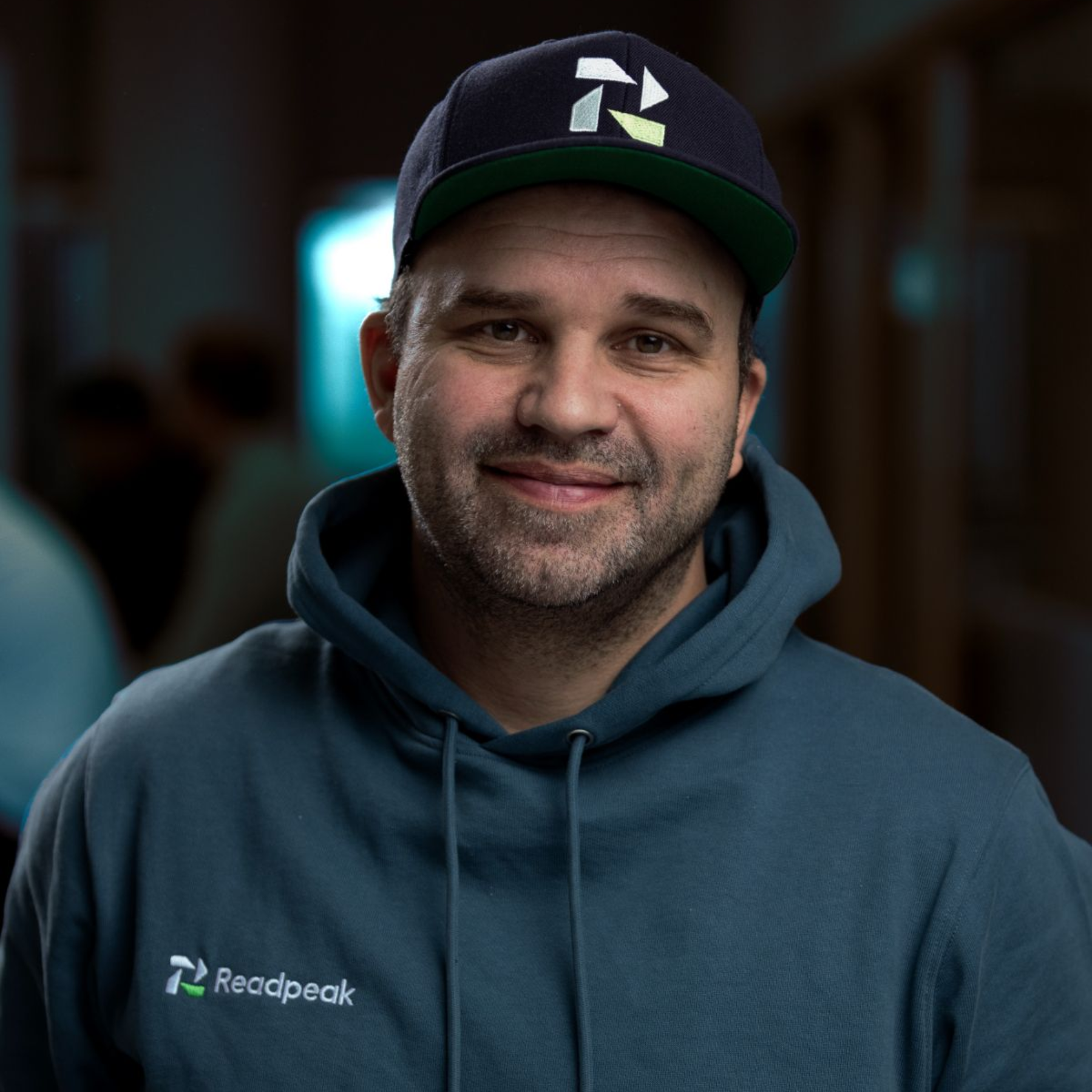
Tomas Forsbäck
Founder and CEO of Readpeak
Tomas Forsbäck is the founder and CEO of Readpeak, the leading programmatic native advertising platform operating across 10 markets.