
How nostalgia became the new hot advertising commodity
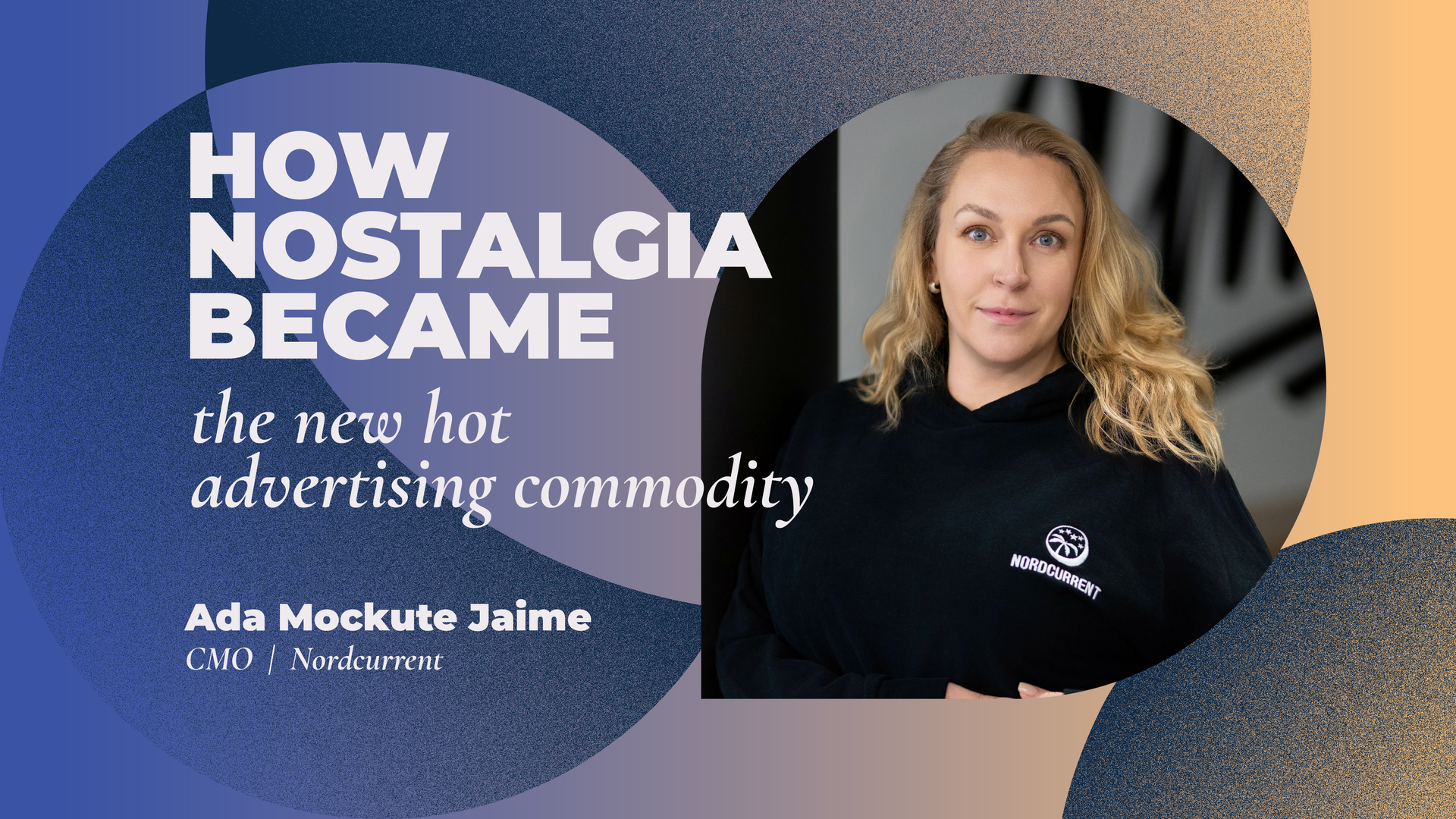
As attention spans shrink and acquisition costs rise, brands are rediscovering nostalgia as one of advertising's most effective creative tools. Ada Mockuté Jaime, CMO of Nordcurrent, explores why familiar aesthetics and cultural touchstones drive stronger emotional engagement, particularly in mobile gaming, and why the best nostalgia-led campaigns deliver on the promise they make.
Advertising and nostalgia are old friends.
So old, in fact, that one the most famous scenes of AMC’s
Mad Men involves Don Draper pitching a client on the emotion’s unique selling power. He describes nostalgia as the key to creating a deep bond between the product and the consumer. “It’s delicate, but potent,” he tells the client. He wins the business.
Although Don Draper and his advertising agency are fictional, his monologue hits on something true. Advertising has long chased what he calls “the rare occasion when the public can be engaged on a level beyond flash.” We’re seeing that manifest now in mobile gaming.
Much of the work of contemporary advertising is threading the needle between rising acquisition costs and shrinking attention spans. For years, we thought the loudest and most polished ads were the best solution, but it seems we’ve hit the ceiling for how loud or polished an ad can be. Meanwhile, creatives that lean heavily on nostalgia and familiarity are beginning to outperform flashier approaches.
We’ve been headed this way for years.
Neilsen’s Emotional Resonance Study, published in 2016, found a “strong correlation” between a “[the emotive power of in-market commercials] and shifts in brand favorability.” People respond strongly to nostalgia because it is an emotional response, not a rational one.
When a user sees an ad that reminds them of something familiar, whether that’s pixel-art platformers, early mobile puzzle games, or the aesthetic of their teenage-years console, they don’t have to start at the beginning. People respond faster when something feels emotionally comfortable and accessible. An ad requires less outright persuasion if the viewer already recognises its references. On a data dashboard, this manifests as more clicks and more people willing to install or try the app.
On the product side, this isn’t even remotely new. Vintage games retrofitted into mobile formats have always done extremely well. Tetris will probably never fall off the App Store charts. It’s the perfect combination of nostalgic and timeless fun. It follows that the same logic can be extended to mobile game advertising.
A new perception of the good old days
Nostalgia once operated along the lines of “you had to be there.” When people felt it, they were reaching into their own memories. This is no longer the case, particularly for Gen Z. On Tiktok and Instagram, people born in the 2000s devour content that harkens back to the ‘90s and y2k. They respond as passionately to
the GoldenEye 007 pause music as the Gen Xers and Millennials who actually owned Nintendo 64s.
Contemporary nostalgic ads activate this broader cultural memory. Social media has rendered the markers of specific cultural eras legible to people who weren’t alive to experience them. There are 25-year-olds who’ve seen the clip of Bill Clinton playing saxophone on
The Arsenio Hall Show and take pictures of their friends with disposable cameras. Their positive response to nostalgic ads, accessed through cultural memory, is rooted in the perceived psychological safety of the past. The data backs this up. One Ipsos survey
found that “given the choice, people would prefer to have been born in 1975 rather than 2025 by a margin of almost two to one,” which is revelatory in light of the fact that 72% of the respondents were born after 1975.
Marketing that responds in kind is succeeding, especially when it’s about the ‘90s. According to a
2026 joint report by Sprout Social and the Cultural Marketing Institute, ‘90s-themed campaigns saw a 30% rise in interaction, which can hardly be credited exclusively to consumers who remember the ‘90s.
Nostalgia, neatly deployed
An 8-bit character jumping around is not a foolproof ad on its own. Users will recognise when an ad leverages a familiar aesthetic but doesn’t deliver on the indicated experience in gameplay. As always, retention metrics will reveal the gap between expectation and reality.
Effective nostalgic mobile game ads still adhere to the basic principles of game marketing. They must align with the core game loop. If you advertise a classic puzzle mechanic, it needs to show up in the first five minutes of gameplay. If you’re referencing early-2000s website aesthetics, your design and progression systems must reinforce it. Nostalgia-fication doesn’t stop with the marketing team. It accompanies a product decision.
Nostalgia-based marketing in mobile gaming reflects the medium’s maturity. Mobile gaming now has its own history and cultural touchstones. It has multiple generations of players with different tastes. In time, a successful mobile game ad might skew self-referential. One Ipsos survey found that "utilising aspects of a brand’s history and heritage boosts brand attention of ads by 8%.”
Perhaps automation and AI-driven segmentation will one day generate highly personalised nostalgia-based ads, where creative is dynamically tailored to reflect the specific experiences a user is most likely to recognize. For now,, the proliferation of nostalgic mobile gaming ads are proof that people are seeking something beyond flash and noise.
In other words, they want something delicate, but potent.

Ada Mockutė Jaime
CMO of Nordcurrent
Ada Mockutė Jaime is the Chief Marketing Officer at Nordcurrent, the largest Baltic video game development and publishing studio. With over a decade of marketing leadership across finance, tech, and consumer goods, she brings a data-driven and community-focused approach to gaming. Previously, she led marketing and customer intelligence at Luminor Group and served as CMO at Citadele Bank, driving brand growth in competitive markets. At Nordcurrent, Ada is focused on strengthening the company’s global brand, fostering player-driven content and communities, and expanding in key markets like Asia, North America, and Europe. She is passionate about championing diversity and inclusion in gaming.
Founded in 2002 in Vilnius, Lithuania, Nordcurrent is the largest homegrown video game company in the Baltic region, with additional studios in Warsaw and Gothenburg. The company specializes in casual and mid-core mobile games, with a portfolio of over 50 titles played by millions worldwide. Its biggest hit, Cooking Fever, has been downloaded nearly 400 million times, while other top titles like Pocket Styler and Airplane Chefs continue to attract millions of active players. Nordcurrent’s commitment to game longevity, player-centric experiences, and innovation has made it one of the most successful independent gaming companies in Europe.